
Protecting Your Peace When No One Else Will: Introducing The Divorce Collective
There’s really no guidebook for how to get divorced. There are a lot of people with a lot of experience, wildly varied, myself included, who want to share how they did it/failed/survived/would do it differently. If you’re reading this you most likely are also subscribed to any number of Instagram accounts, Facebook groups, email newsletters and podcasts that help you navigate the chaos and difficulties of a high-conflict divorce. This is because knowledge is power and feeling connected to a network of other people who’ve been through it can be incredibly supportive. 10 years post-divorce, I kinda consider myself an O.G. of high-conflict, and I have felt, as is probably obvious from my writing, an obligation to shine the light for those who are going through it now. It’s much more out in the open, too. While the family court may still largely be in the Dark Ages about many of the aspects of high conflict, the public isn’t, so parents who are in it are less afraid to bring it up.
When I got divorced, I really didn’t have much support in the way of knowing wtf to do. I was lucky enough to have my Uncle, who was known to be one of the fiercest divorce lawyers in the city of Denver, and one of my very best friends, who worked for him at one time, both on speed dial. My own attorney who was a lovely human being and a good lawyer was maybe not the most clued-in to my situation, was a little checked out, possibly nearing retirement, and seemed flustered by my ex’s intense patterns of behavior. I was also in a daze. When you’ve been in the hole of a difficult and dehumanizing marriage, you kind of lose your sense of self. So despite lots of knowledgeable people in my corner, when it came to the constant argumentative, defensive, menacing comms with my ex, I felt totally adrift. And frankly, ashamed; like, it was my fault for not knowing how to make my kids’ dad amicably coparent. At the time, there were very few people talking about high conflict personalities in the family court and how to handle them. So I struggled through every email, text, and kid drop off because they all turned into a huge fight. My nervous system wrecked, I had few if any moments of true calm.
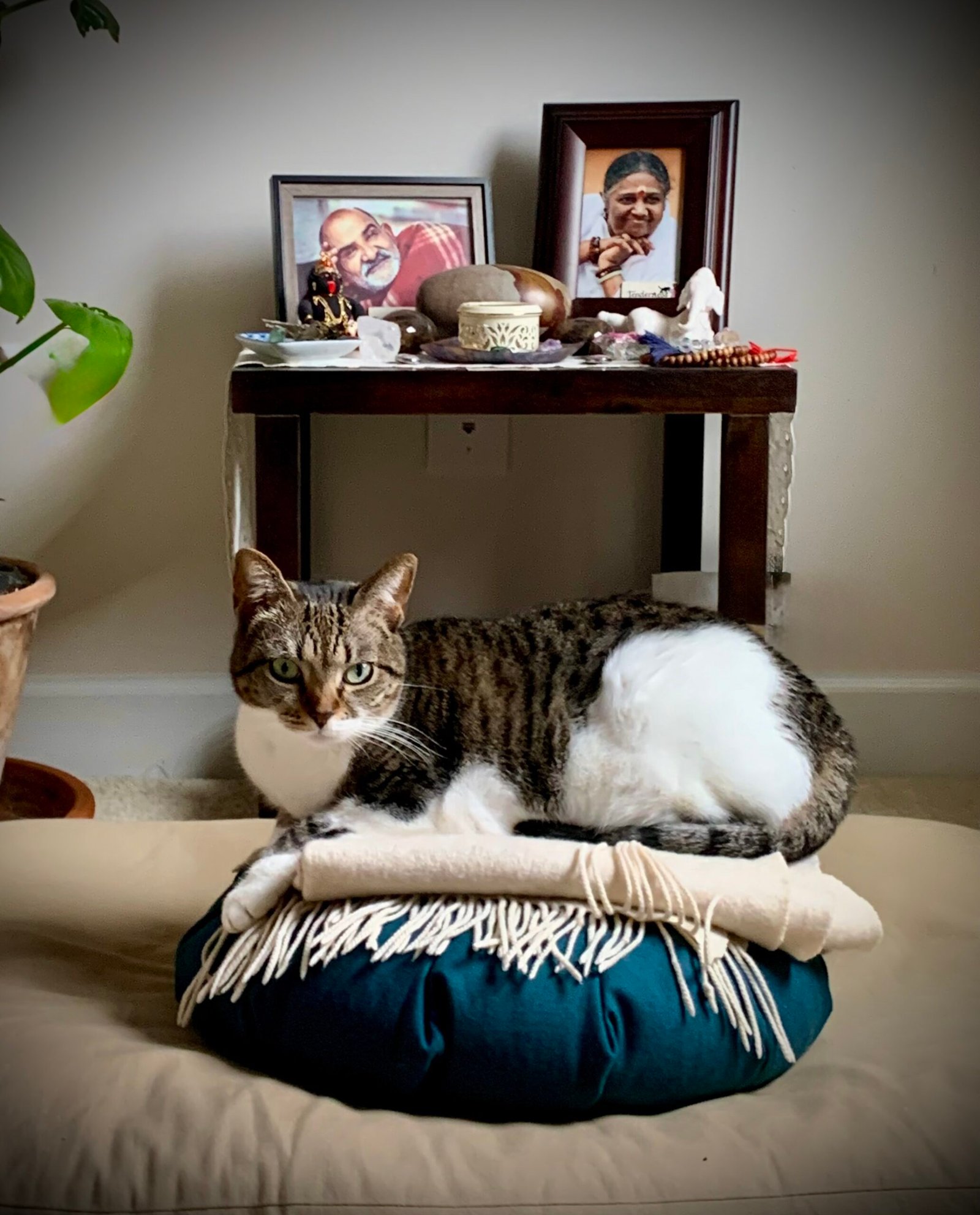
From the very beginning of my separation though, I kept with my meditation practice. I started sitting in 2001, after the attacks on the World Trade Center, because I was struggling with how to hold all the feelings I was having about race and terrorism and perceived safety. I knew I didn’t need therapy; I needed community, one that came together to focus on peace and regulation, and I found that at a little Zendo in Santa Cruz, California. Since the birth of my kids, I kept up with my practice off and on, but as soon as I moved into the spare bedroom at my parents’ house the day my separation agreement was signed, I set up a little table so I could sit on my cushion every morning, gather myself, and breathe.
These days, I still bring a lot of shit to the cushion. There are feelings I’m still, like all those years ago after 9/11, trying to figure out how to hold. Divorce is hard and messy no matter how you cut it, but if there’s trauma around it, there’s not a ton of room to unpack and process that when you’re trying to solo-parent, work full-time, and make some kind of life for yourself and your kids. Yet, we have to find ways of taking care of those feelings so we don’t dig deeper grooves of anxiety, or bigger habits around anger and resentment. I still wake up some nights pissed off about something my coparent said they would do but didn’t. I still struggle from time to time with how to craft an email that will get them to actually respond or not fight back. If I stay in bed too long in the early morning, my mind will inevitably wander to regrets I have about not standing up for myself or my kids in ways I wish I had. There’s no shortage of thoughts and feelings about a high conflict divorce that couldn’t be sat with.
Meditation has reminded me that not all of my thoughts are real. Things I’m really upset about in a moment become less upsetting when I sit down and see I’m relating from an old habitual pattern. Processing an old story doesn’t always feel as gratifying when I’m watching my mind rehash it in my morning meditation. Meditation has helped me differentiate between the things I truly care about and the things my mind thinks are important but really aren’t. I can’t say what those things are for you, but I can say that sitting down day after day to see all the ways that my own mind tries to distract me from peace, well, it’s shocking. My coparent may be a menace, but I’ve learned that sometimes my thoughts can be an even worse enemy if I let it.
Part of creating a safe and peaceful place after a difficult marriage is absolutely about getting out of the house, getting your kids in a good place, and securing your well-being. And even in the face of constant conflict and bad behavior, it’s still up to us to make sure we’re protecting our peace. No one can do it for us, and we sure as hell can’t force our coparent to calm the fuck down. Gaining control over the parts of ourselves—the stories we tell ourselves, the reflexive reactions to the same old bad behavior—that’s always going to be our responsibility. And I’m not exaggerating when I say that, if you’re willing to just sit down for a few minutes and watch your thoughts, peace isn’t as far away, or as dependent on external circumstances, as you think.
So, party people, join us! The Divorce Collective, a Meditation Group for Divorced People starts October 1. Go here to learn more about it, sign up, and pay whatever you can to participate: https://justtobywedgle.com/the-divorce-collective/. Hope to see you there!