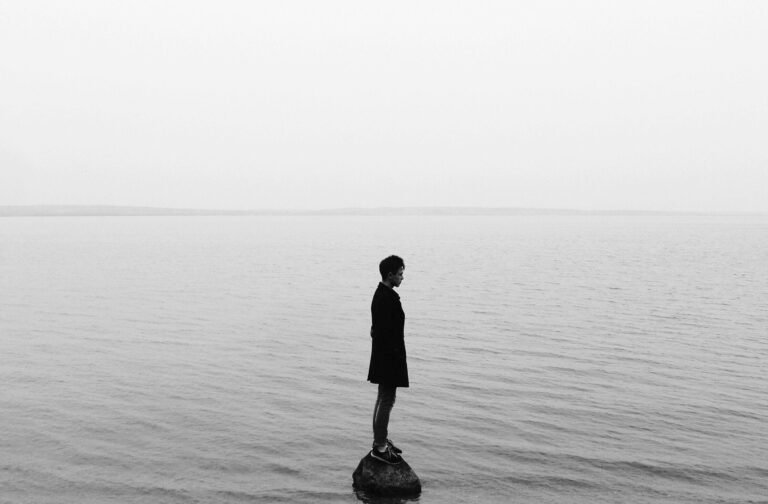

Living By Chaos
No matter what your political beliefs, I think we all can agree that the state of our country feels unsettling. So much change all at once, rules and ideas we’ve lived by our entire lives are being questioned, dismantled; and the path ahead, if there is one, is known only to one man and maybe his cohorts. I know that some people, many people, feel that this is good change, that it brings a much-needed disruption to a failing system that wasn’t serving people the way it was intended. But my experience so far, both my own and those of the people I encounter every day, are feeling distraught, overwhelmed, and frightened. The fear of losing a job, or funding for medical research, or money to live on from the stock market, or even for the safety and well-being of their trans-gendered or special needs child is very real right now. It’s putting into question our universal human needs—and rights—to safety, security, self-expression and equality. Whether you believe this is productive or dangerous for society, the overarching experience is chaotic.
Living with someone who displays behaviors and makes decisions based on their own self-interest, coupled with a lack of concern for the needs of others, can be extremely disruptive. When we’ve had relationships with someone like this, we learn to “walk on eggshells,” feeling uncertainty in every moment because we don’t know whether our behavior will cause us to be accepted or cast out. We start to feel an uncertainty of our own character, doubting who we are, our own self-worth, and the choices we’ve made. It’s shocking to see the number of people who have lived with this kind of person at some point in their lives—an emotionally immature parent, a personality disordered spouse, or an addict—and who now are feeling a similar sense of societal unease and instability because of the behavior and choices of the people in charge. It’s as if we are walking around re-traumatized, remembering what it’s been like to live under the thumb of an unpredictable, unempathetic person.
I bring this up because in my own life, I’m surprised at the number of people who don’t see this as narcissism. Again, I’m making an emotional argument, not a political one. I wonder whether people don’t see it because they’ve never encountered it on a personal level like many of us have. I’m guessing there are plenty of people who have never had to negotiate the safety of their choices, the reality of having to finance their integrity to get their needs met, or the fear of never knowing if you were going to be loved or persecuted on a daily basis. It sounds dramatic but people who lack emotional maturity live in this kind of dysregulation and drag you around with them in it. The irony is that, as we’re seeing now, people like this project a vision and a lifestyle of stability, but they only live by chaos. If you haven’t experienced this before, you are quite possibly being fooled by someone who casts a confident outward appearance while simultaneously building a life of uncertainty and insecurity behind the scenes. And if you’ve lived in this kind of chaos before, what we’re experiencing on a global level now feels eerily, dangerously, familiar.
Obviously, we are a little bit trapped. In a marriage where the other person has patterns of behavior like these, we have the option, usually, to leave. We can make choices to support ourselves and find peace, rather than stay on constantly shaky ground. But in this current political situation, and maybe for some of us still in our divorced lives, we are locked in an ongoing cycle of uncertainty, instability, and vulnerability. And while there are really no words of comfort one can offer, no plan to make things more stable for us physically or mentally, we must find ways to maintain our own sense of peace and empowerment.
The question I began asking myself late in my divorce, and the one that I am finding helpful for myself in this political climate is: is there another way to feel empowered when I’m identifying the other person as the problem? It is easy to fall into the trap of feeling like we’ve lost or given our power away to another person, or in this case an entire system, and must scramble or fight to get it back. If I’m seeing another person as the reason I can’t find a sense of peace and security, then I’m giving my power to feel peaceful and secure away to that other person. And if I’m waiting for another person to consider my safety, to look out for my well-being, and to create stability for me, then I am giving my power away, too.
Kai Cheng Thom, a writer, poet, and teacher of embodied conflict resolution speaks openly about human rights, and specifically queer rights, and social change. She says this about freedom and safety: “We have been conditioned to think of safety as a zero-sum game of our own rights versus the rights of others. The culture in which we live has taught us that in order to be safe, we must exert our will over others, that the problems of social conflict and risk can only be solved through social control, the rule of law and order, discipline and punishment.” If feeling safe is an all-or-nothing situation based solely in the will of people other than ourselves, then we are forever at risk of feeling we do not have the right to be safe. But the question we want to ask ourselves is, how do we create our own safe spaces, even when it feels like our safety is dependent upon someone else?
Obviously, I can’t answer this question for anyone but myself. But I urge you dear readers, to spend some time thinking of what in your current situation will allow you to create your own sense of safety and peace for yourself. And the lessons I learned from my divorce, from the conflict that began in my marriage and continued long after I’d left it, have been extremely helpful in getting through what many of us are experiencing now. Disengaging from conflict when it’s not necessary, focusing on the well-being of my children and myself, and stopping the train of thought that tells me that someone else’s behavior is responsible for my anger, fear, and anxiety. I am safe when I tend to my own sense of safety; when I make choices that keep me in self-regulation. As in divorce, it doesn’t mean I ignore the bad behaviors of others or not take a stand for the things that create stability and safety for me and my family. But it does mean that when I can let go, I do. This allows me to create stability where there is little, to stop seeing the other person as “the enemy,” and to keep my power when I’m in danger of losing it.