
You’re Not Doing Anything Wrong
In the early years of my divorce, I felt alone in that way where you’ve become so isolated you had no idea you were alone. It was hard to find people who were talking about high conflict divorce, and most of the resources out there were straight up bleak; books on estrangement (which thankfully wasn’t one of my problems) and other terrifying personal stories without much effective coaching on what to do about it. Lots on the alternative, of course; plenty of resources on “healthy” coparenting which at the time for me seemed impossible. I didn’t know there were qualities of a difficult divorce that were actually universal, characteristics of the people involved and their behaviors. Everyone else seemed to be able to do it amicably. What the hell was wrong with me?
Finding my Divorce Coach was a huge shift. She had a podcast, and groups where I got to see and connect with the reality that there were many people who struggled to have a peaceful divorce—that it wasn’t just me. I learned that actually, one-quarter of all divorces are considered high conflict. Later, when I went to work for my coach in her ghost writing program, I was stunned to see how everyone was in a similar boat. I read other high-conflict couples’ emails and saw how the tone of every one of them was the same. A reprimanding, punishing voice, accusations and threats, a proud and holier-than-thou attitude of how one parent was looking out for the best interest of the kids, while the other was selfish, doing nothing but royally fucking them up. I felt seen.
Learning that roughly 25% of all divorces end up in some kind of high conflict situation made me feel relieved, but also sad for all of us out there trying to navigate this alone—our compasses broken, our maps wet, and our flashlights out of batteries, trying to figure out how to get to a place that felt peaceful, safe, and at the same time very far away. Today, there are support groups online, influencers, coaches, even now (thank God) lawyers and mediators who are high conflict informed, who understand and offer genuine assistance to these parents. And everyone is asking the question, writing the blog, offering answers and personal stories to help guide those just entering the arena on how to get out not just alive, but thriving.
Community is important. Think of the time you asked your neighbor for the proverbial cup of sugar, or when you went to your kid’s school function and stood around laughing and talking to the parents in their class. If you’re a part of any community group on Facebook—your town’s “mom’s group,” a bread baking forum, you name it—think of how grateful you are when you can pop in and get a burning question answered by the group. Community offers us support, wisdom, solidarity, a oneness we don’t often get to feel in our winner-takes-all society. If the numbers are true, then 99% of us are the block party, we are the swim team, we are the bake sale. And we are those things for ourselves as much as we are for each other.
The word in Buddhism is Sangha; community. A group of people who gather together to lift each other up, learn some things about themselves and the rest of the world, and strengthen each other’s faith in the goodness of humankind. It’s a place where you feel seen, safe, and heard, witnessed in your triumphs and your struggles. The longer you are a part of a Sangha, the deeper your bonds with those people become. Excited to see familiar faces, to catch up on their news, and to take part in some sort of activity that helps you remember that you are more than just a body, going to work to make widgets, then coming home to hustle until you pass out on the couch. Life feels bigger and more meaningful when you have a group of like-minded, same-story kind of people to share it with.
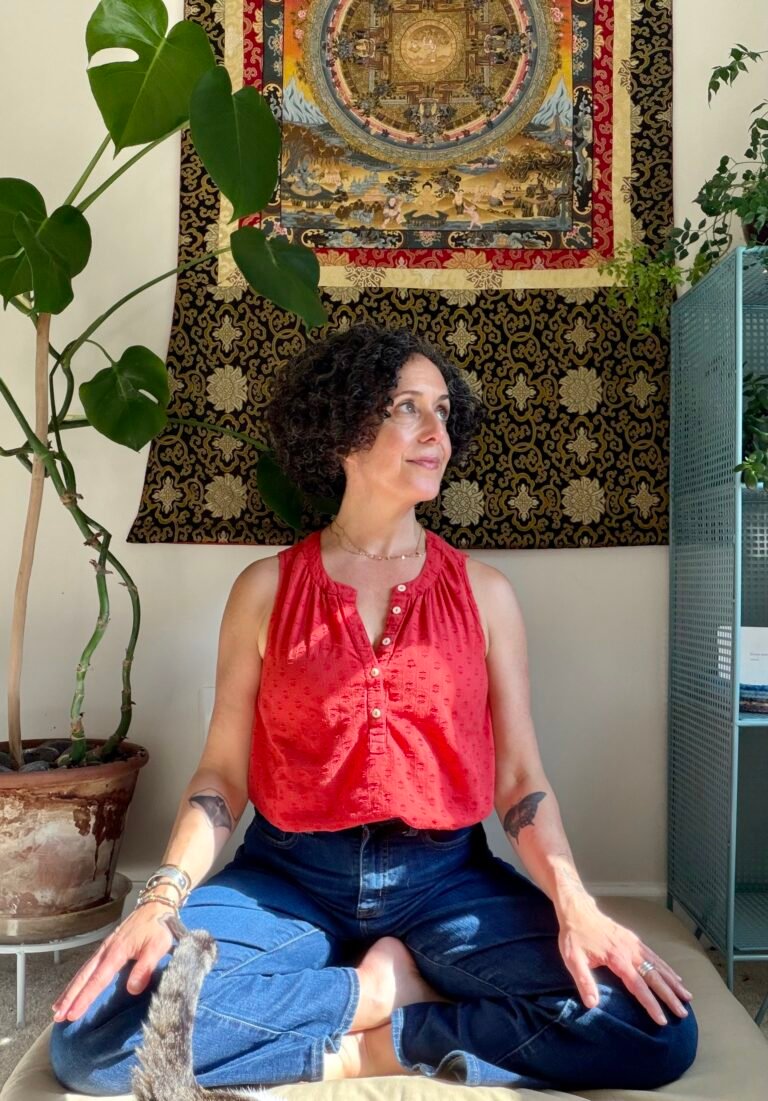
This is why I’ve created The Divorce Collective, a meditation group for divorced people. Because knowing that I was not in fact a unicorn in the divorce world was a freeing revelation for me, I wanted to start something that would make other people in this situation also feel less alone. And we’re meditating together because it’s a wonderful way to see the faces of people who are in a similar boat while finding the rare and precious stillness our lives so desperately need, and to find it together.
It’s easy to rely on friends and family, calling or texting when things are hard, but honestly, sometimes we all get worn out by that. Our coparent’s behavior really never changes no matter how many years post-divorce we are, so those same stories of how our co-parent isn’t responding to our comms, or didn’t submit the school form, or totally undermined a decision you’d already made, or sent a stupidly snarky email, we all get tired of telling it and our loved ones aren’t necessarily trained to help us move on. Plus, the intensity and frankly, relentlessness of our feelings—the grief we feel every time our kids go to the other parent’s house, fears about money, our overwhelm at the sheer volume of shit to do—no one understands that better than another single parent. Parenting groups, single-parenting forums on social, and especially a high-conflict support group are great options for support. Finding a “village” of other folks who are also in it, wherever you can find it, is gold.
Since I’m an acupuncturist, I’ll share a little Chinese medical gem. We speak about autumn as the season of letting go. Here, we release what’s old, outdated, and unnecessary to make room for something new, for the things that inspire us. A season associated with the Lungs and the Lare Intestine, we breathe in, taking in what nourishes us, and we breathe out, letting go of the, well… crap. It’s a wonderful time of year to seek out new ways of coping with the difficulties and aloneness of divorce. So, find your people, find your village, your Sangha, and step into a new time of feeling supported, connected, and whole.